BONO EDUCATION DIRECTORATE INITIATES STAKEHOLDER COLLABORATION TO CURB EXAMINATION MALPRACTICES

As candidates gear up for the 2025 West African Senior School Certificate Examination (WASSCE), key stakeholders in the Bono Region have come together to confront the rising issue of examination malpractices.
The examination, scheduled by the Ghana Education Service (GES) to run from August 4 to September 19, has sparked serious concern over the integrity of the process in the Bono Region in recent years.
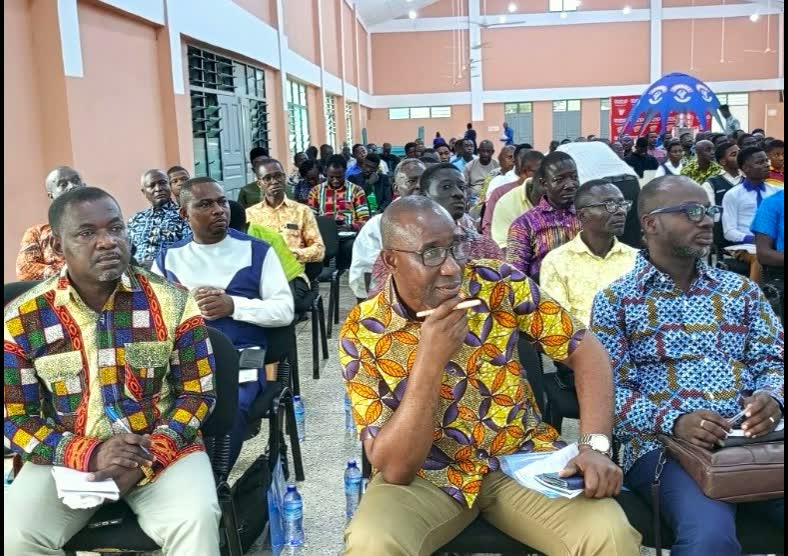
In response, the Bono Regional Education Directorate organized a stakeholder engagement session at Sunyani Senior High School. The meeting brought together parents, teachers, and civil society representatives to address the situation and explore sustainable solutions.
Mr. Gabriel Antwi, the Bono Regional Director of Education, addressed participants at the event, warning that examination malpractices “have become an existential threat to quality education delivery in the region.”
He emphasized the seriousness of the issue, stating: “Examination malpractices have compromised the integrity of the examination and the expected learning outcome in our schools,” and pointed to students’ inadequate preparation as a key driver behind the malpractice trend.
The statistics presented by Mr. Antwi painted a worrying picture. In 2022, six Senior High Schools (SHSs) in the Bono Region had their exam papers canceled due to malpractices. The following year, the number of affected schools rose to ten. In total, 19 out of the 37 SHSs in the region experienced cancellations or withheld papers in 2023.
To tackle the situation head-on, Mr. Antwi announced that the Directorate, with support from various stakeholders, is adopting proactive measures. One major step includes instructing all SHSs to conduct their own stakeholder engagements focused on identifying solutions to exam malpractices.
Furthermore, all Municipal and District Directorates of Education have been directed to collaborate closely with schools and report their findings to the regional office. As part of this effort, each school is expected to set up a five-member School Level Malpractice Monitoring Committee. These committees will be responsible for drafting and implementing action plans to reduce exam fraud within their institutions.
Calling for collective responsibility, Mr. Antwi urged parents to resist the temptation to pay bribes to teachers and invigilators to assist their children during exams.
He also issued a stern warning to teachers who may be tempted to engage in such practices, stating: “Our profession is a role-modelling institution and we must therefore respect and protect our dignity.”
Mr. Antwi concluded by stressing the importance of joint action: fighting examination malpractice, he said, is a shared responsibility, and all stakeholders must come together to safeguard the credibility of WASSCE results.
Top Management
-

- Hon. Joseph Addae Akwaboa (RM)
-

- Ms. Golda Grace Asante (RCD)
Photo Gallery