BONO FARMERS INTRODUCED TO DRY SEASON FARMING PRACTICES UNDER THE WEST AFRICA FOOD SYSTEM RESILIENCE PROJECT

The West Africa Food System Resilience Project (FSRP) is a regional programme that seeks to improve the sub-region’s preparedness against food insecurity and enhance the resilience of its food system’s, particularly in the participating countries.
The FSRP is funded by the International Development Association (IDA) of the World Bank and is being implemented under the auspices of ECOWAS. The 5-year project, which commenced in 2023, aims to enhance preparedness against food insecurity and improve the resilience of Ghana’s food systems.
The targeted beneficiaries include smallholder farmers (including women, youth & vulnerable groups) as well as commercial actors such as anchor farmers, aggregators, processors, transporters & marketers, and frontline institutions.
During the last quarter of 2024 and into 2025, farmers were introduced to dry season farming practices (under the FSRP-Norwegian Tomato Sub-Project) to promote all-year-round crop production, ensuring food stability and improving the livelihoods of rural farmers.
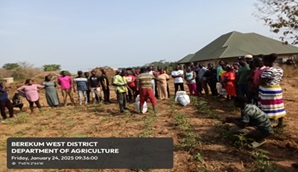
The Departments of Agriculture in Sunyani West, Berekum West, Dormaa Municipal, and Dormaa East benefited from demonstrations that introduced improved technologies to selected Farmer-Based Organizations (FBOs).
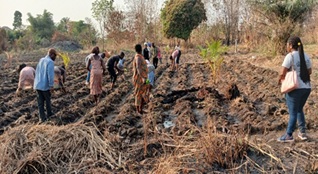
These districts established a tomato demonstration farm each, utilizing drought- and disease-resistant varieties such as Sika and Raja. The demonstration also aimed to introduce climate-smart technologies and encourage farmers to adopt these improved technologies for maximum benefits.
Some of the activities carried out during the period included transplanting, water management, weed control, staking, pruning, pest and disease control, fertilizer application, and the implementation of improved harvesting practices. In total, 209 participants were involved in the field days, comprising 93 women and 71 youths.
Top Management
-

- Hon. Joseph Addae Akwaboa (RM)
-

- Mr. Nar-ire P. David (Ag. RCD)
Photo Gallery